
The quick answer? Neither one is universally "better."
It depends entirely on what you're trying to achieve, how complex your workflows are, and whether your business operates in a stable or dynamic environment. If you're hoping for a simple "pick this one" answer, you're looking at the wrong question.
However, what I can tell you is this: the landscape in 2026 has shifted dramatically in favor of agentic AI for businesses dealing with complexity, unpredictability, and multi-step processes. Traditional AI still has its place: a critical one, actually: but the gap between "AI that follows orders" and "AI that thinks ahead" is widening fast.
What Traditional AI Actually Does (And Why It Still Matters)
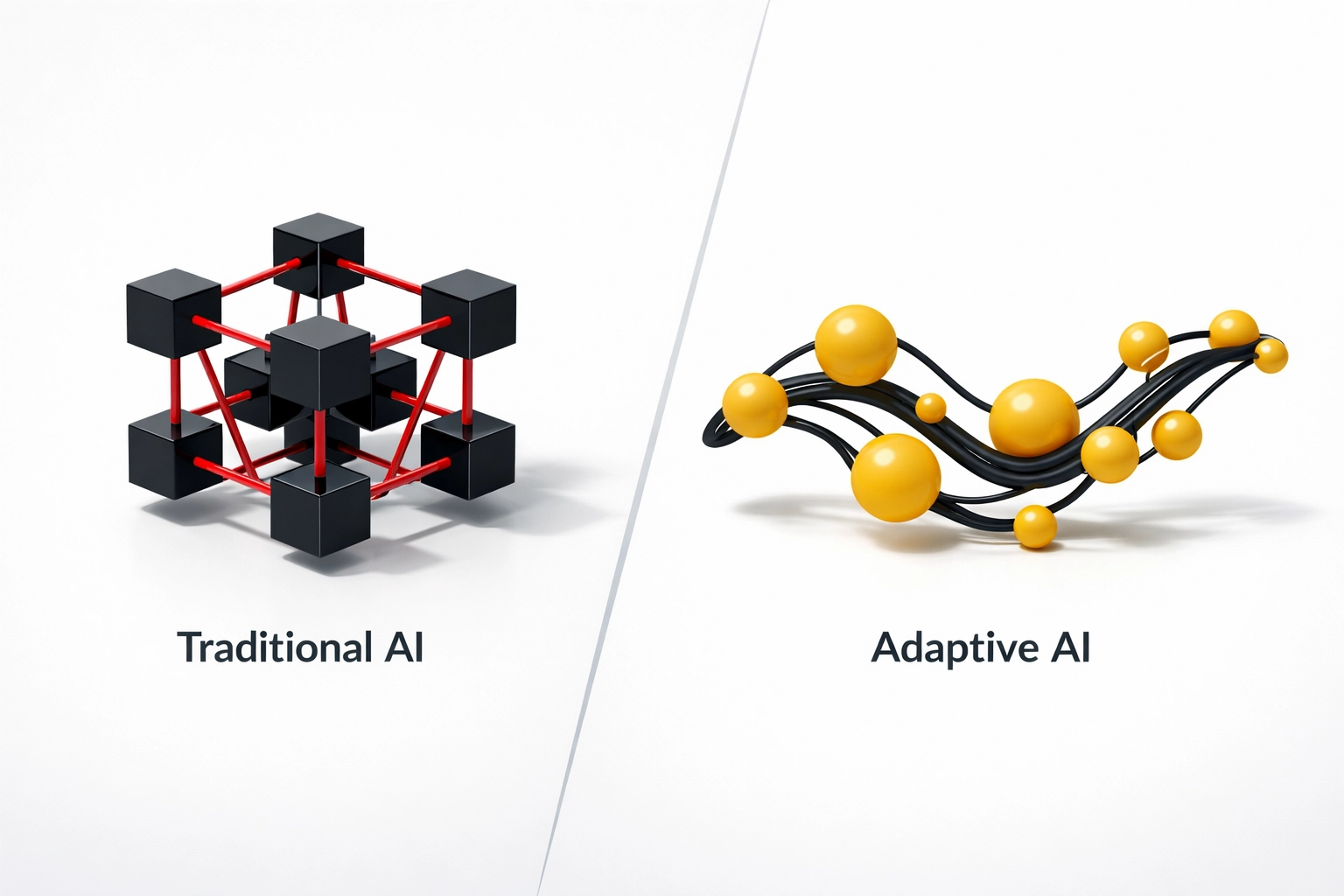
Traditional AI is, at its core, pattern recognition dressed up in sophisticated algorithms. It analyzes data, identifies trends, makes predictions based on historical patterns, and executes well-defined tasks with consistency. Think of it as a very smart calculator: impressive, certainly, but ultimately confined to the logic you've programmed into it.
My experience working with enterprises across the Middle East and beyond is that traditional AI excels when the rules are clear and the environment is stable. Customer segmentation? Predictive maintenance? Demand forecasting based on historical sales data? Traditional AI handles these beautifully and cost-effectively.
The limitation, of course, is adaptability. Traditional AI doesn't know what to do when conditions change outside its training data. It can't improvise, can't consider alternative approaches, and certainly can't orchestrate complex workflows across multiple systems. It's a specialist, not a strategist.
Enter Agentic AI: Autonomous, Goal-Oriented, and Proactive
Agentic AI represents a fundamental shift in how we think about artificial intelligence. Rather than waiting for explicit commands and executing predetermined logic, agentic AI systems operate with a degree of autonomy that would have seemed science fiction just a few years ago (yet here we are).
These systems don't just respond: they anticipate. They don't just execute: they orchestrate. They evaluate situations, consider multiple options, choose optimal actions, and learn from outcomes to refine their approach over time.
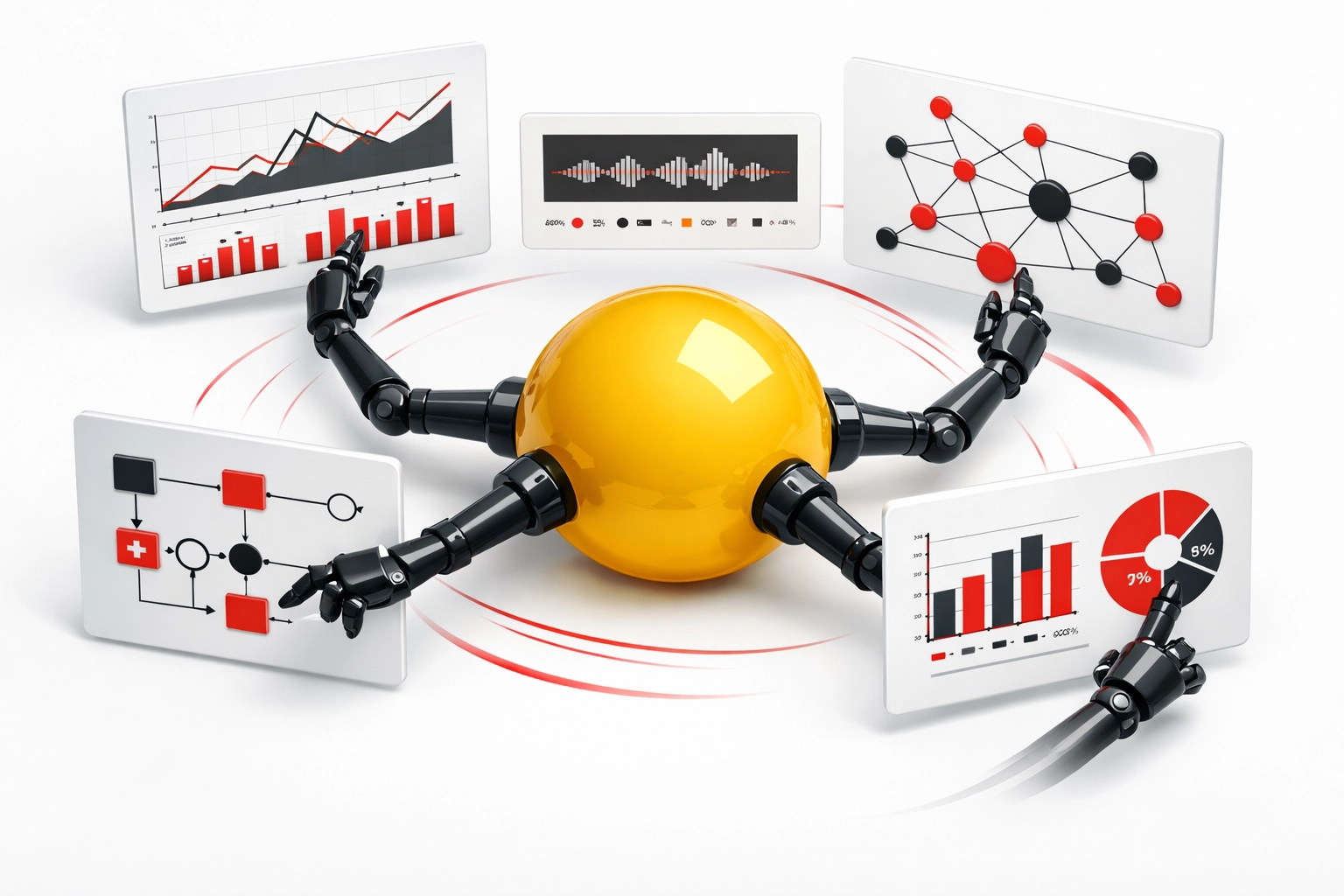
The genius of agentic AI lies in its ability to maintain context across interactions and coordinate entire workflows without constant human intervention. Picture this: instead of a chatbot that answers FAQs with scripted responses, you have an autonomous system that diagnoses customer issues independently, accesses relevant databases, processes refunds, escalates complex cases to human agents when necessary, and learns which approaches yield the best customer satisfaction scores.
That's not incremental improvement. That's a different category of capability altogether.
The Critical Differences That Actually Matter for Business
Let's cut through the hype and focus on what separates these approaches in practical terms:
Decision-making capability: Traditional AI follows your predetermined logic religiously: it cannot and will not deviate from programming. Agentic AI evaluates situations dynamically and chooses optimal actions based on current conditions, not just historical patterns.
Adaptability: When traditional AI encounters scenarios outside its training data, it either fails or produces nonsensical outputs. Agentic AI recognizes its limitations, tries alternative methods, and can even request additional information or escalate appropriately.
Task scope: Traditional AI handles isolated tasks independently. Each function exists in its own silo. Agentic AI orchestrates entire workflows, maintaining context and continuity across multiple steps and systems.
Proactivity: This is perhaps the most underappreciated distinction. Traditional AI is purely reactive: waiting for inputs to process. Agentic AI monitors conditions proactively and can initiate actions before problems escalate or opportunities disappear.
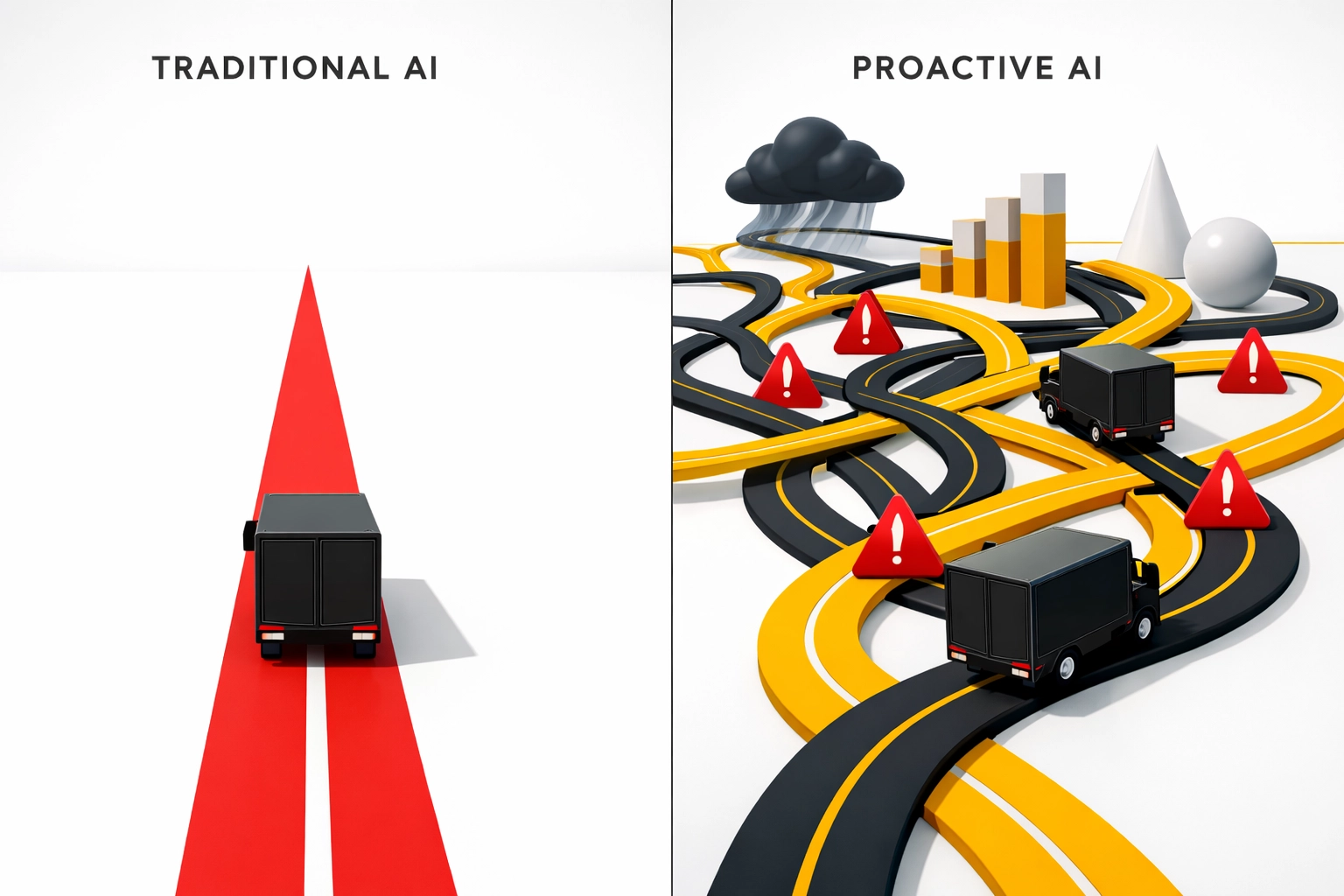
A real-world example clarifies this beautifully: in supply chain management, traditional AI optimizes delivery routes based on historical traffic patterns and known variables. It's effective until a major weather event, geopolitical disruption, or unexpected demand surge occurs. Then it's useless.
Agentic AI, however, continuously monitors weather conditions, tracks economic indicators, follows news developments, and proactively reconfigures logistics to minimize delays before they happen. It doesn't wait to be told there's a problem: it sees patterns emerging and adjusts strategy accordingly.
When Traditional AI Is Actually the Right Choice
Despite the excitement around agentic AI (and yes, there's considerable excitement: some would say hype), traditional AI remains the optimal choice for many business applications in 2026.
If your processes involve well-defined, repetitive tasks with clear parameters and stable conditions, traditional AI delivers sufficient capability at lower complexity and cost. Pattern recognition in financial fraud detection, basic customer service triage, inventory forecasting in stable markets: these don't require sophisticated autonomous reasoning.
Traditional AI also makes sense when consistency and adherence to fixed logic matter most. Regulatory compliance checking, for instance, benefits from rule-based systems that never deviate from established protocols. You don't want creativity there: you want reliability.
Cost considerations matter too. For businesses with limited AI maturity or straightforward automation needs, investing in agentic AI infrastructure would be like buying a Formula 1 car for your daily commute. Technically impressive, financially questionable.
When Agentic AI Becomes Non-Negotiable
The calculus changes dramatically when you're dealing with complexity, dynamism, and workflows that span multiple systems and decision points.
If your business operates in fast-changing environments where conditions shift frequently and decisions require real-time context awareness, agentic AI isn't just superior: it's becoming non-negotiable for competitive advantage. Customer experience management across omnichannel touchpoints, dynamic pricing in volatile markets, autonomous IT operations: these scenarios demand the capabilities only agentic AI provides.
Research indicates agentic AI can accelerate business processes by 30% to 50%. That's not marginal improvement: that's transformation. More tellingly, projections show that by the end of 2026 (we're talking months away, not years), 40% of enterprise applications will include task-specific AI agents. By 2035, agentic AI could generate nearly 30% of enterprise application software revenue, surpassing $450 billion.
Those aren't aspirational figures: they represent investment patterns and deployment trajectories already underway. The businesses positioning themselves now are building capabilities their competitors will struggle to catch up with later.
The AI Roadmap Question: Which Path Forward?
Here's where AI strategy consulting becomes critical, because the real question isn't "which AI is better?" but rather "what does our AI roadmap look like, and how do we sequence these capabilities?"
Most businesses in 2026 need both traditional and agentic AI, deployed strategically across different functions based on task complexity and environmental dynamism. The framework we use at Marketways AI & Analytics recognizes that AI transformation isn't binary: it's a progression through maturity levels.
Start with traditional AI for foundational capabilities: data infrastructure, basic analytics, process automation in stable domains. Build the organizational competency and data quality required for AI success. Then selectively introduce agentic AI where autonomous decision-making and workflow orchestration deliver disproportionate value.
The mistake I see repeatedly is businesses either staying too conservative (limiting themselves to traditional AI when they need more) or jumping prematurely to agentic AI without the foundational capabilities to support it. Both approaches waste resources and create disillusionment.
The 2026 Reality: Integration, Not Replacement
The most sophisticated enterprises in 2026 aren't choosing between traditional and agentic AI: they're orchestrating both within integrated systems where each approach handles what it does best.
Traditional AI processes massive data volumes, identifies patterns, and handles high-volume, well-defined tasks with consistency and efficiency. Agentic AI sits above this, coordinating workflows, making contextual decisions, and handling the complex, dynamic scenarios that require autonomous reasoning.
Think of traditional AI as your analytical engine and agentic AI as your strategic orchestrator. You need both, deployed thoughtfully based on your specific business context, technical readiness, and strategic objectives.
The businesses winning in this environment have moved beyond asking "which AI?" to asking "how do we build an AI roadmap that evolves our capabilities systematically while delivering measurable business value at each stage?"
That's a more complex question, certainly. But it's also the right one.
If your projects involve dynamic, fast-changing environments and complex decision-making, agentic AI offers better long-term ROI by reducing maintenance overhead and accelerating innovation cycles. For stable, repetitive tasks with clear parameters, traditional AI provides proven value at lower complexity.
The key is knowing which is which: and having an AI strategy that deploys both appropriately.
